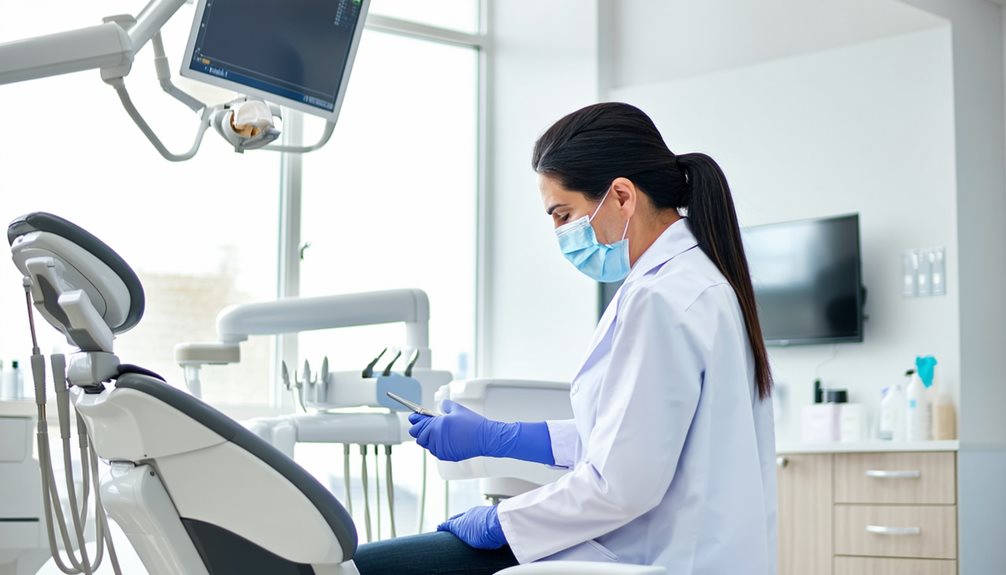
Selecting top emergency dentists for managing severe tooth infections necessitates evaluating their clinical expertise and advanced treatment protocols. An ideal emergency dentist should possess certifications in endodontics or oral surgery, guaranteeing adept handling of complex infections. Advanced diagnostic technologies such as digital radiography and laser therapy enhance precise evaluation and treatment outcomes. Facilities offering 24/7 care and tele-dentistry access are crucial for immediate intervention, while adherence to sterilization protocols safeguards patient health. Evaluating these criteria guarantees capable handling of tooth infections. Further exploration into top-rated emergency dentists reveals those who meet these stringent professional standards.
Understanding Severe Tooth Infections
Severe tooth infections, often characterized by abscesses, arise when bacteria invade the dental pulp, leading to inflammation and pus accumulation. This condition is a critical concern in dental health, as the infection can extend to surrounding tissues and potentially result in systemic complications.
Recognizing tooth infection symptoms is imperative for timely intervention. Common clinical manifestations include severe, persistent toothache, sensitivity to hot and cold stimuli, swelling of the face or gums, and fever. In some cases, lymphadenopathy may also be observed, indicating the spread of infection.
The treatment options for severe tooth infections are multi-faceted, involving both pharmacological and procedural interventions. Initial management usually includes the administration of antibiotics to control bacterial proliferation.
However, definitive treatment often necessitates endodontic therapy or, in more severe cases, extraction of the affected tooth. Root canal therapy is the preferred method, aiming to eradicate the infected pulp tissue while preserving the tooth structure.
For those seeking innovative solutions, advancements in laser therapy and regenerative endodontics offer promising alternatives, minimizing discomfort and enhancing recovery rates. The integration of these cutting-edge techniques exemplifies the evolution of dental practices in addressing complex infections efficiently.
Importance of Emergency Dental Care
Emergency dental care plays a critical role in the management of severe tooth infections by providing immediate analgesic interventions to alleviate acute pain.
Timely treatment is essential to prevent the progression of infections, which can lead to systemic complications such as cellulitis or osteomyelitis.
Furthermore, prompt and appropriate therapeutic measures are crucial for preserving the integrity of oral structures, thereby maintaining overall oral health and function.
Immediate Pain Relief
When a dental abscess leads to significant discomfort, immediate intervention is paramount to prevent further complications and provide pain relief. Emergency dental care professionals employ advanced pain management techniques, which are essential for effective symptomatic relief.
Initial interventions often include the utilization of over-the-counter remedies such as nonsteroidal anti-inflammatory drugs (NSAIDs) that serve to alleviate inflammation and reduce pain intensity. These pharmacological agents are crucial in managing acute dental pain by inhibiting cyclooxygenase enzymes and subsequently decreasing prostaglandin synthesis.
Furthermore, emergency dentists may incorporate local anesthetics, such as lidocaine, which provide swift analgesic effects by blocking sodium channels and impeding nerve conduction. This localized approach is vital for immediate pain mitigation, particularly when dealing with severe oral infections.
For more persistent cases, systemic analgesics might be necessary to guarantee thorough pain control.
In tandem with these methods, adjunctive therapies such as cryotherapy and low-level laser therapy are increasingly being explored for their potential to enhance patient comfort and accelerate the healing process.
Preventing Complications
Addressing dental infections promptly is essential in mitigating the risk of systemic complications and ensuring overall patient health. Dental infections, if left untreated, can escalate into severe conditions such as cellulitis, osteomyelitis, or even sepsis. Consequently, timely intervention by an emergency dentist is indispensable.
A core component of infection prevention involves the immediate assessment and management of the infection source, which often includes debridement and drainage procedures. Such interventions aim to reduce bacterial load and prevent further microbial dissemination.
Infection prevention strategies extend beyond immediate treatment, stressing the importance of ongoing oral hygiene education. Patients are encouraged to adopt rigorous oral hygiene practices, including regular brushing, flossing, and professional dental cleanings, as these are vital in maintaining the integrity of oral tissues and preventing future infections.
Additionally, emergency dentists may employ innovative diagnostic tools such as digital radiography and advanced microbial assays to tailor precise treatment protocols, thereby optimizing patient outcomes.
Furthermore, the integration of telehealth platforms can facilitate remote monitoring and follow-up consultations, enabling continuous patient engagement and adherence to prescribed oral hygiene regimens. This holistic approach not only addresses the acute phase of dental infections but also fosters long-term oral health and systemic well-being.
Preserving Oral Health
In the domain of dental healthcare, the preservation of oral health is fundamentally linked to the availability and effectiveness of emergency dental care services. This relationship underscores the importance of timely intervention in the management of acute dental conditions, which, if neglected, can escalate into more severe systemic complications.
Emergency dental care serves as a critical component of preventive care, ensuring that oral hygiene is maintained and pathological progression is halted. The integration of innovative treatment protocols in emergency settings is pivotal to this endeavor.
-
Immediate diagnostic assessments****: Utilizing advanced imaging technologies and thorough clinical evaluations to formulate precise treatment plans.
-
Innovative therapeutic interventions****: Employing cutting-edge techniques and materials to address acute infections, thereby minimizing tissue damage and promoting rapid recovery.
-
Emphasis on patient education****: Reinforcing the principles of oral hygiene and preventive care to mitigate the recurrence of dental emergencies.
Such measures contribute to the overarching goal of sustaining oral health, thereby reducing the incidence of chronic dental pathologies.
The pursuit of innovation in emergency dental care not only enhances the efficacy of acute treatment but also fortifies the foundation of long-term oral health maintenance. This proactive approach is indispensable in the contemporary landscape of dental healthcare.
Criteria for Choosing a Dentist
Selecting an emergency dentist for severe tooth infections necessitates a thorough evaluation of their clinical experience and professional credentials to ascertain competence in managing complex cases.
Equally important is the dentist’s availability and accessibility, which are critical in providing timely intervention to mitigate the risk of systemic complications.
Additionally, the dentist’s treatment protocols and the sophistication of their equipment should be assessed to guarantee that the most advanced and effective care options are utilized.
Experience and Credentials
Evaluating the experience and credentials of emergency dentists is vital when addressing severe tooth infections. The intricate nature of dental emergencies demands practitioners who possess a profound understanding of odontogenic infections and the ability to execute complex treatment protocols.
Credentials verification is fundamental; verifying a dentist is licensed and board-certified instills confidence in their professional competence. Additionally, experience evaluation is significant, as it provides insight into a dentist’s familiarity with a range of infection scenarios and therapeutic interventions.
To facilitate the selection of a qualified emergency dentist, consider the following:
-
Advanced Certifications: Dentists with certifications in oral surgery or endodontics demonstrate specialized training in handling severe dental infections effectively.
-
Clinical Experience: Practitioners with extensive clinical backgrounds in emergency dentistry are adept at diagnosing and managing complex infection cases, utilizing cutting-edge techniques.
-
Professional Affiliations: Membership in esteemed dental organizations, such as the American Dental Association, signifies ongoing commitment to professional development and adherence to the latest treatment standards.
For those seeking innovative and effective care, prioritizing dentists with robust experience and verified credentials guarantees the best outcomes.
A meticulous assessment of these factors empowers patients to make informed decisions, potentially mitigating the complications associated with severe tooth infections through expert intervention.
Availability and Accessibility
A beacon of relief in dental emergencies, availability and accessibility of emergency dentists play a pivotal role in managing severe tooth infections. Timely intervention is essential, as delays can exacerbate infection, leading to complications such as abscess formation or systemic spread. Hence, the criteria for selecting a dentist must prioritize both the immediacy of urgent care and the geographical convenience of dental access.
In the area of innovative dental care, 24/7 operational facilities exemplify the epitome of accessibility. They offer flexible scheduling and rapid response capabilities, guaranteeing that patients receive immediate attention regardless of the time or day.
The integration of tele-dentistry platforms further enhances accessibility, providing preliminary consultations and triage assessments remotely, thereby streamlining patient flow and optimizing in-office resources.
Moreover, proximity to public transportation and the availability of mobile dental units extend the reach of urgent care services, particularly for patients in underserved areas. A well-networked practice that collaborates with other medical professionals ensures thorough care continuity, enhancing treatment efficacy.
As the demand for prompt and effective dental access grows, embracing cutting-edge solutions and strategic partnerships becomes indispensable in revolutionizing emergency dental care paradigms.
Treatment and Equipment
To effectively manage severe tooth infections, the caliber of treatment and the sophistication of dental equipment are paramount considerations when choosing an emergency dentist. A practitioner’s ability to diagnose and address dental emergencies hinges on the availability and utilization of cutting-edge diagnostic equipment and innovative treatment options.
Dentists equipped with advanced diagnostic technologies, such as digital radiography and cone beam computed tomography, can offer precise assessments of the infection’s severity and scope. This precision facilitates the formulation of a targeted treatment protocol that enhances clinical outcomes and expedites recovery.
-
Innovative Treatment Options: Access to state-of-the-art laser therapy and minimally invasive surgical techniques can greatly improve patient comfort and accelerate healing.
-
Comprehensive Diagnostic Equipment: Utilization of intraoral cameras and digital imaging technologies guarantees accurate diagnosis and efficient treatment planning.
-
Sterilization and Infection Control: Adherence to stringent sterilization protocols and utilization of autoclave systems minimize cross-contamination risks, safeguarding patient health.
For patients seeking emergency dental care, selecting a provider with these capabilities guarantees an elevated standard of care. In an era where innovation drives healthcare advancements, these criteria are indispensable in guaranteeing optimal management of severe tooth infections.
Top-Rated Emergency Dentists
Identifying top-rated emergency dentists requires a detailed understanding of clinical expertise, patient care standards, and available treatment protocols.
Top-rated clinics distinguish themselves through an integration of advanced diagnostic tools, adept proficiency in emergency procedures, and a commitment to continuous innovation in dental practices. These clinics employ cutting-edge technologies such as digital radiography and intraoral cameras, enhancing diagnostic accuracy and facilitating the swift formulation of tailored treatment plans for severe tooth infections.
Emergency procedures at these clinics are streamlined, leveraging minimally invasive techniques to effectively alleviate acute dental pain while minimizing recovery time. For instance, laser-assisted endodontic therapies have become increasingly prevalent, offering precision and reducing the risk of secondary infections.
In addition, the implementation of tele-dentistry platforms by these top-rated emergency dentists guarantees that patients receive timely consultations and guidance even beyond standard office hours.
The focus on patient-centered care is paramount, with these clinics adhering to stringent sterilization protocols and employing biocompatible materials to enhance patient safety and treatment outcomes.
Patient Testimonials and Experiences
Patient testimonials and experiences illuminate the practical impact and efficacy of top-rated emergency dental clinics‘ methodologies. These firsthand accounts often highlight the precision and innovation of clinical practices employed during times of urgent dental distress. Through patient stories, we gain insights into how cutting-edge treatment protocols swiftly alleviate severe tooth infections, ensuring minimal discomfort and ideal recovery outcomes.
-
Rapid Response: Patients frequently report the swift response times of emergency dental teams, which are essential for managing acute infections and preventing further complications.
-
Advanced Treatment Modalities: Personal experiences often underscore the utilization of novel technologies such as digital imaging and laser therapy, which enhance diagnostic accuracy and treatment efficacy.
-
Comprehensive Care Plans: Testimonials reveal the importance of holistic care strategies that integrate pain management, infection control, and post-procedural education, fostering long-term oral health.
These patient stories serve as a demonstration of the transformative potential of innovative dental practices. By combining clinical acumen with advanced therapeutic techniques, emergency dentists not only address the immediate dental crisis but also contribute to the evolution of dental care standards.
Such experiences advocate for continuous innovation and adaptation in emergency dental services, ensuring patient-centered outcomes that align with modern healthcare expectations.
How to Prepare for Your Visit
Preparation is crucial for optimizing the efficacy of your emergency dental visit. Initiating the process involves compiling a thorough appointment checklist that encompasses relevant clinical documentation, including previous dental records and a detailed account of current symptoms. This information enables the dental professional to formulate an accurate diagnosis and implement appropriate treatment protocols efficiently.
In addition, guarantee the inclusion of any pertinent medical history, such as allergies or ongoing medications, to preempt adverse reactions during treatment.
Insurance coverage verification constitutes a critical component of preparatory measures. Contact your insurance provider to confirm the scope of coverage for emergency dental services, ensuring alignment with the treatment plan proposed by the dental clinician. This proactive approach mitigates financial uncertainties and facilitates an uninterrupted treatment process.
Adopting an innovative mindset, consider leveraging digital platforms to expedite the preparatory phase. Many modern dental practices offer online patient portals for pre-appointment paperwork submission, thereby streamlining administrative procedures and minimizing in-office wait times.
Additionally, make arrangements for post-appointment care, such as transportation and potential recovery assistance, to optimize treatment outcomes. By meticulously adhering to these preparatory guidelines, patients can notably enhance the overall effectiveness and efficiency of their emergency dental care experience.
Frequently Asked Questions
What Should I Do if My Dentist Is Unavailable?
If your dentist is unavailable, explore dental alternatives by visiting an urgent care center proficient in emergency oral healthcare. These facilities provide interim treatment protocols, leveraging clinical knowledge to manage acute conditions until specialized dental intervention becomes accessible.
Are There Any Home Remedies for Pain Relief Before Seeing a Dentist?
For interim relief before dental consultation, consider natural painkillers like clove oil for its eugenol content, and employ a cold compress to reduce inflammation and numb the affected area, adhering to clinical guidelines for temporary pain management.
How Can I Prevent Severe Tooth Infections in the Future?
To mitigate severe tooth infections, implement rigorous oral hygiene practices and adhere to routine checkups. Emphasizing innovative techniques such as advanced diagnostic tools and personalized treatment protocols can further enhance preventative measures, ensuring ideal dental health maintenance.
What Should I Bring to an Emergency Dental Appointment?
For an emergency dental appointment, bring essential emergency supplies, including identification, insurance details, current medications list, and dental records. This appointment checklist guarantees efficient treatment protocols, facilitating innovative and accurate clinical interventions by the dental team.
How Do I Know if My Dental Insurance Covers Emergency Care?
To determine if emergency care is covered, review your dental policy’s coverage limits section. It is essential to assess the policy’s specific provisions regarding emergency treatment protocols and verify any exclusions or limitations inherent within the plan.
Conclusion
Severe tooth infections necessitate immediate attention, emphasizing the critical nature of emergency dental care. Selection of an appropriate dentist should be based on credentials, experience, and patient reviews. The importance of rapid intervention cannot be overstated, as untreated infections can lead to systemic complications. Utilizing criteria such as professional ratings and testimonials guarantees ideal patient outcomes. Preparation for dental visits, including understanding treatment protocols and having necessary documentation, can facilitate efficient and effective management of dental emergencies.