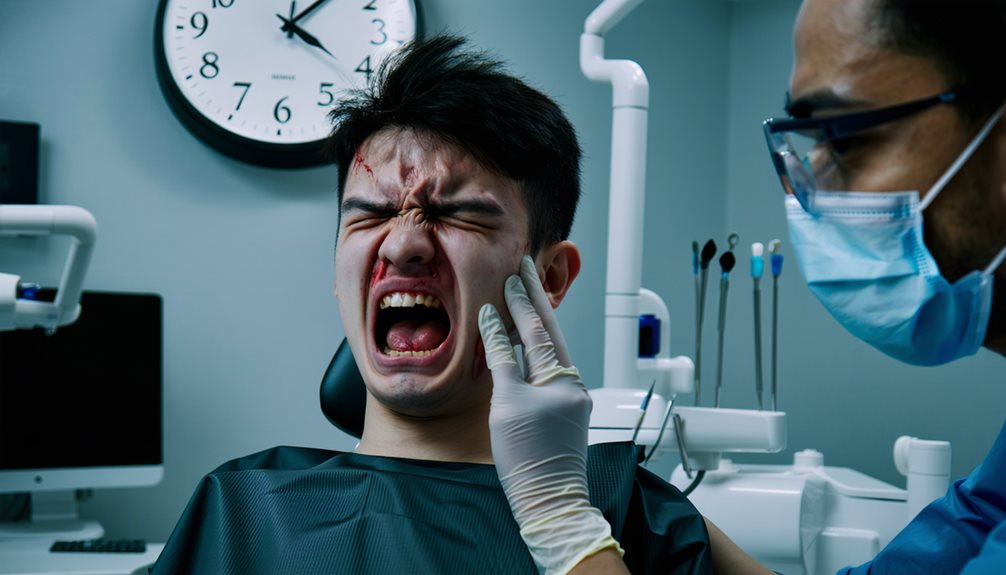
Accessing the best emergency dental options entails a structured approach involving immediate care, such as managing a knocked-out tooth by handling it by the crown and storing it in milk. Utilize telehealth services for initial guidance and locate dental professionals offering 24/7 services through reliable mobile apps. Temporary solutions like over-the-counter dental cement or analgesics can alleviate discomfort until professional treatment is available, which might include root canal therapy or dental implants. Prioritize preventive care measures, including regular checkups and protective gear, to avert future emergencies. Discover more efficient strategies for ensuring superior dental health outcomes.
Understanding a Knocked-Out Tooth
Experiencing a knocked-out tooth, also known as an avulsed tooth, requires immediate attention to increase the chances of successful reimplantation. The urgency stems from the delicate nature of periodontal ligaments and pulp vitality, both essential for effective tooth reattachment techniques. The window for ideal reattachment is narrow, with evidence suggesting that the first 30 minutes are critical.
Understanding the dental trauma causes is fundamental in preventing such occurrences. High-impact sports, vehicular incidents, and falls are leading contributors to dental avulsions, emphasizing the need for protective measures such as mouthguards and seatbelts.
Emerging tooth reattachment techniques have revolutionized the management of avulsed teeth. Innovative approaches, including the use of biocompatible materials and stem-cell therapies, are under exploration to enhance root resorption prevention and periodontal ligament healing. These advancements aim to extend the viability of reimplanted teeth, reducing the necessity for prosthetic replacements.
The role of dental professionals is significant in implementing these techniques, ensuring that patients receive cutting-edge care tailored to individual needs. Embracing these innovations not only maximizes clinical outcomes but also aligns with the aspirations of patients seeking all-encompassing, forward-thinking dental care solutions.
Immediate First Aid Steps
In the event of a knocked-out tooth, the initial minutes are essential for preserving the tooth’s viability and ensuring successful reimplantation. Immediate first aid steps are critical in managing dental trauma effectively.
Begin by carefully retrieving the tooth, handling it by the crown rather than the root to prevent further damage. Rinse it gently with saline or milk, avoiding tap water which can harm the root cells. Swift action can increase the likelihood of successful reattachment.
Simultaneously, address pain management by gently applying a cold compress to the affected area to minimize swelling and discomfort. Over-the-counter analgesics such as ibuprofen can also be administered to alleviate pain. However, avoid placing aspirin directly on the gums, as this may cause tissue damage.
If reinsertion of the tooth is possible, gently attempt to reposition it within the socket, ensuring correct alignment. If not feasible, place the tooth in a container with milk or saline to preserve moisture and cellular integrity.
These innovative, patient-focused measures are designed to mitigate the effects of dental trauma, thereby optimizing outcomes in a challenging emergency. By adhering to these precise steps, individuals can enhance the prospects of dental restoration and recovery.
Finding Emergency Dental Services
Swift and effective management of dental trauma extends beyond immediate first aid to include locating appropriate emergency dental services. Prompt access to specialized care is essential for successful outcomes, especially when dealing with severe dental injuries.
Establishing a reliable network of emergency contacts becomes indispensable. This network should ideally encompass dental practitioners skilled in urgent care for dental emergencies, including fractured teeth, avulsions, and abscesses.
To enhance patient outcomes, it is imperative to leverage technology and innovative solutions in this search. Many dental practices now offer telehealth consultations as an initial evaluation step, allowing patients to receive professional advice remotely. This not only facilitates swift triage but also helps determine whether in-person urgent care is necessary.
Furthermore, innovative mobile applications can assist in swiftly locating nearby dental clinics specializing in urgent care. These platforms often provide real-time availability, enabling patients to make informed decisions and reduce wait times.
It is also advisable to maintain a list of emergency contacts, including dental professionals and clinics that offer extended hours or weekend services.
Temporary Solutions Until Treatment
When faced with a dental emergency, it is essential to employ temporary solutions that stabilize the condition until proper treatment can be administered. Temporary fixes serve as a critical bridge, alleviating discomfort and preventing further complications.
Among the most effective DIY remedies is the use of over-the-counter dental cement or temporary filling materials, which can be applied to cover exposed areas in cases of lost fillings or chipped teeth. This temporary fix provides a barrier against bacterial invasion and reduces sensitivity.
In instances of a knocked-out tooth, preserving the tooth in milk or a specialized tooth preservation kit can enhance the viability of reattachment. Rinsing the mouth with saline solution is another DIY remedy that can aid in maintaining oral hygiene and reducing inflammation when professional care is delayed.
For pain management, over-the-counter analgesics such as ibuprofen can be administered to mitigate discomfort and inflammation. It is critical, however, to avoid aspirin, as it may exacerbate bleeding.
While these temporary solutions offer relief, they are not substitutes for professional dental intervention. Utilizing these innovative approaches guarantees that patients remain as stable and comfortable as possible until definitive treatment is achievable.
Professional Treatment Options
For ideal outcomes in emergency dental care, professional treatment options are essential. When faced with acute dental conditions, timely intervention not only alleviates discomfort but also preserves the integrity of oral structures.
One of the most efficacious treatments in such scenarios is the root canal procedure. A root canal meticulously removes infected or damaged pulp from the tooth, thereby eliminating pain and preventing further degradation. This approach is crucial for patients experiencing severe toothaches or abscesses, providing swift relief while maintaining the natural tooth.
Moreover, in instances where tooth preservation is not feasible, dental implants emerge as an innovative solution. These implants, made of biocompatible materials, serve as a robust foundation for replacement teeth, ensuring functionality and aesthetics akin to natural dentition. They are particularly beneficial in cases of traumatic tooth loss where immediate restoration is imperative.
Utilizing advanced diagnostic tools and cutting-edge techniques, dental professionals can offer tailored solutions that address specific emergency needs.
Preventing Future Incidents
Preventing future dental emergencies requires a proactive approach centered on regular dental checkups, which facilitate early detection and management of potential issues.
Maintaining proper oral hygiene, including effective brushing and flossing techniques, is essential in reducing the risk of decay and periodontal disease.
Additionally, utilizing protective dental gear, such as mouthguards during sports activities, can greatly mitigate the risk of dental trauma.
Regular Dental Checkups
Regular dental checkups are a cornerstone of preventive oral health care, providing individuals with the opportunity to maintain ideal dental hygiene and avert potential emergencies. The importance of regularity in dental visits cannot be overstated, as consistent monitoring by dental professionals allows for early detection and management of oral conditions. This proactive approach markedly reduces the likelihood of developing severe dental issues that could escalate into emergencies.
The benefits of prevention achieved through regular dental checkups are manifold. By undergoing routine examinations, patients can avoid costly and uncomfortable treatments in the future. Dental professionals employ innovative diagnostic tools and techniques to identify early signs of decay, periodontal disease, and other oral health concerns. This enables timely intervention, which is paramount in safeguarding the longevity of one’s dental health.
In addition to diagnostic evaluations, regular dental checkups often include professional cleaning procedures that remove plaque and tartar buildup, further minimizing the risk of cavities and gum disease.
Dental practitioners are well-equipped to offer personalized advice tailored to each patient’s unique oral health needs. Emphasizing preventive care through regular dental checkups not only enhances oral health outcomes but also empowers patients to take control of their dental wellness, fostering an innovative approach to lifelong oral care.
Proper Oral Hygiene
Proper oral hygiene is a fundamental aspect of preventing dental emergencies and maintaining ideal oral health. Rigorous adherence to oral care protocols can greatly diminish the risk of unexpected dental issues. A pivotal component is the implementation of effective flossing techniques, which facilitate the removal of interdental plaque that regular brushing may overlook. This minimizes the onset of periodontal diseases and cavities, thereby reducing potential emergencies.
The incorporation of mouthwash into daily dental regimens presents additional prophylactic benefits. Mouthwash effectively eliminates residual bacteria, reduces biofilm, and freshens breath, contributing to an overall healthier oral environment. Selecting an antimicrobial mouthwash can further integrate an innovative approach by targeting specific pathogens responsible for oral diseases.
To optimize oral hygiene practices, consider the following:
-
Adopt Flossing Techniques: Utilize proper flossing methods, such as the C-shape technique, ensuring thorough cleaning between each tooth without injuring the gums.
-
Utilize Mouthwash Benefits: Choose a mouthwash that complements your specific oral health needs, such as those containing fluoride for enhanced enamel protection.
-
Routine Brushing: Brush teeth at least twice daily with fluoride toothpaste, employing circular motions to effectively clean all surfaces.
Protective Dental Gear
Protective dental gear plays an essential role in safeguarding oral structures against potential trauma and dental emergencies. In particular, the use of custom-fitted mouthguards is vital, offering substantial benefits in mitigating the risk of oral injuries during high-impact or contact sports.
Mouthguards are meticulously designed to absorb shock, reducing the likelihood of tooth fractures, dislocations, and soft tissue damage. They are crafted from durable materials, ensuring both comfort and thorough coverage of dental arches, thereby enhancing compliance among users.
Moreover, the importance of dental helmets cannot be overstated, especially in activities where craniofacial protection is vital. Dental helmets integrate innovative design elements that not only shield the teeth but also the surrounding oral and maxillofacial structures.
By distributing impact forces and minimizing direct pressure on the jaw and teeth, they play a pivotal role in preventing extensive dental trauma.
For individuals seeking to avert future dental emergencies, investing in cutting-edge protective dental gear is a proactive measure. Advancement in dental technology continues to refine these protective devices, making them indispensable tools for maintaining oral health and preventing costly emergency interventions.
The strategic use of mouthguards and dental helmets exemplifies a forward-thinking approach to oral safety.
Frequently Asked Questions
How Do I Manage Pain While Waiting for Emergency Dental Care?
To manage pain while awaiting emergency dental care, consider pain relief through over-the-counter analgesics. Home remedies such as cold compresses and gentle saline rinses can also provide temporary alleviation, demonstrating innovative solutions for immediate discomfort management in dental emergencies.
Are Emergency Dental Services Covered by Insurance?
Insurance coverage for emergency dental services varies by policy. Patients should review their specific plan details to understand benefits, limitations, and any out-of-pocket expenses associated with urgent care. Innovative insurance tools can facilitate these verifications efficiently.
What Should I Do if My Child’s Tooth Is Knocked Out?
If your child’s tooth is knocked out, immediately rinse it with saline and place it in milk. Seek professional dental assistance promptly for tooth replacement options. Immediate care tips guarantee ideal outcomes and innovative solutions for tooth preservation.
Can I Use Over-The-Counter Medications for Dental Emergencies?
In dental emergencies, over-the-counter painkillers can provide temporary relief. However, they should be used cautiously. Dental emergency kits, containing essential tools and materials, can assist in managing immediate issues while seeking professional dental care for definitive treatment.
How Can I Prevent Dental Emergencies During Sports Activities?
To prevent dental emergencies during sports activities, utilizing custom-fitted mouthguards offers substantial benefits by enhancing sports safety. Mouthguards effectively minimize trauma, serving as an innovative preventative measure that guarantees peak protection for athletes’ oral health during physical exertion.
Conclusion
Ensuring prompt and appropriate care for dental emergencies, such as a knocked-out tooth, is vital for ideal outcomes. Immediate first aid measures, including preservation of the tooth and reduction of pain, are essential. Access to emergency dental services should be prioritized to facilitate professional intervention. Temporary solutions can alleviate discomfort until definitive treatment is administered. Implementing preventive strategies can mitigate future risks. Extensive understanding and preparedness can greatly enhance patient prognosis and reduce the likelihood of recurrence.